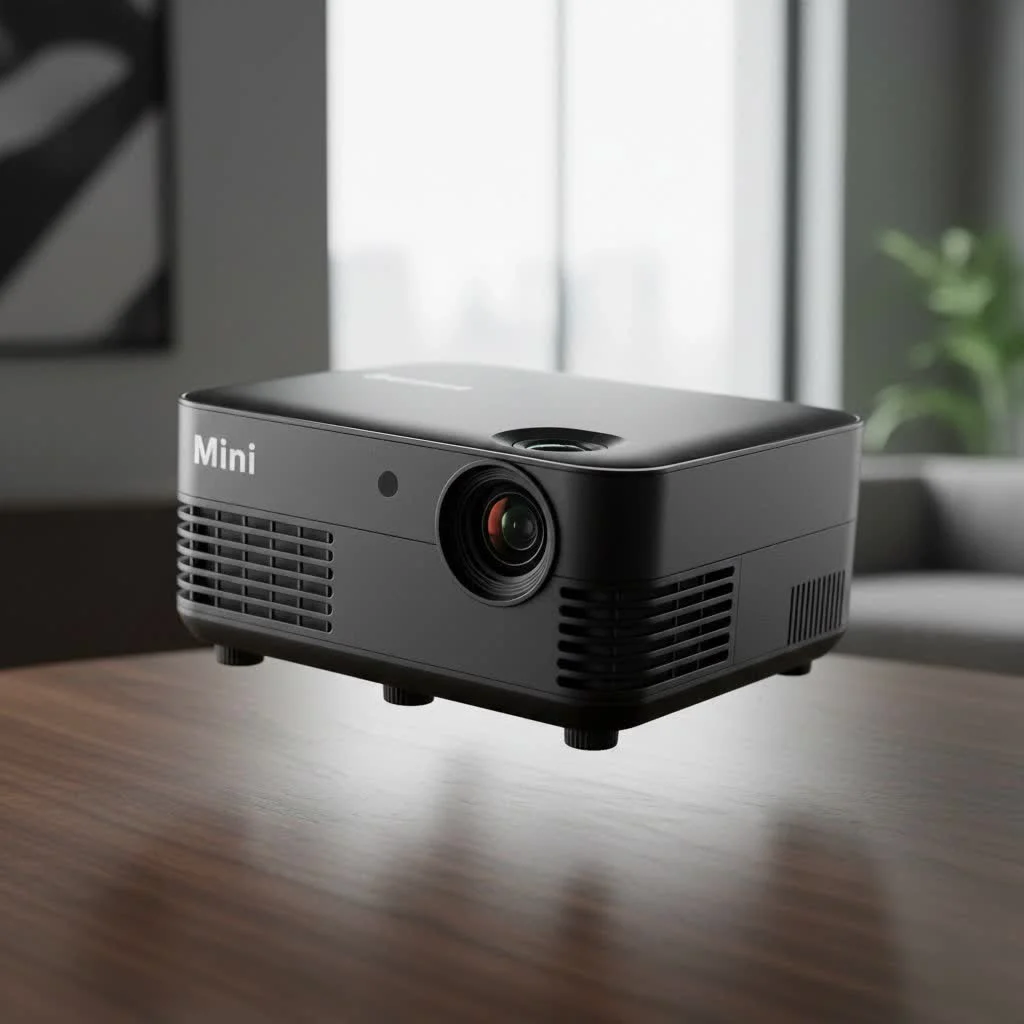
A portable smart mini projector is a compact, all-in-one entertainment device that combines a projector with a rechargeable battery and a smart TV operating system, allowing users to stream content directly from the device without external players. These projectors typically weigh under 5 pounds and offer resolutions up to 1080p, making them ideal for flexible, on-the-go home entertainment and presentations.
What Exactly is a Portable Smart Mini Projector?
Think of a traditional projector: a bulky, heavy box that needs a dedicated power source, a separate laptop or streaming device, and a lot of manual tweaking to get the picture right. Now, shrink it down, add a rechargeable battery, and build in a smart TV operating system. That’s a portable smart mini projector. It’s an all-in-one entertainment solution designed for convenience, flexibility, and on-the-go use, liberating your screen from the confines of a single room. For compare top portable mini on this site.
The Key Features That Define a Great Mini Projector
When you start shopping, you’ll encounter a lot of technical jargon. Let’s break down the most important features so you can make an informed choice.
Let There Be Light: Understanding Brightness (Lumens)
Brightness is arguably the most critical factor for a projector, and it’s measured in ANSI lumens. This standardized measurement tells you how powerful the light output is.
- Under 300 ANSI Lumens: These projectors are ultra-portable but require a very dark room for the image to be vibrant. They are perfect for late-night movies in a controlled environment.
- 400-600 ANSI Lumens: This is the sweet spot for many portable models. It offers more flexibility, performing well in dimly lit rooms and holding up better against small amounts of ambient light.
- Over 600 ANSI Lumens: Projectors in this range are at the higher end of portability but can produce a watchable image even when the lights are on, making them more versatile for different situations.
Pixel Perfect: Why Resolution Matters
Resolution determines the clarity and sharpness of the image. It refers to the number of pixels that make up the picture.
- 720p (HD): An entry-level resolution that’s acceptable for casual viewing on smaller screen sizes.
- 1080p (Full HD): This is the gold standard for most portable smart mini projectors. It provides a crisp, clear image that’s fantastic for movies and gaming without the premium price tag of 4K.
- 4K (Ultra HD): While 4K projectors offer stunning detail, they are typically larger, more expensive, and require a high-quality 4K source to see the full benefit.
True Portability: Battery, Size, and Weight
The core appeal is portability, which comes down to three things:
- Battery: A good built-in battery should last at least 2 to 2.5 hours, enough to get through a standard movie. Some models don’t have a battery but can be powered via a USB-C power bank, provided it has a high enough wattage output (usually 65W or more).
- Weight: Most mini projectors weigh under 5 pounds, with many ultra-compact “pico” models weighing less than 2 pounds. This makes them easy to toss in a bag.
- Size: From models the size of a soda can to those shaped like a small book, their compact form factor makes storage and transport effortless.
The “Smart” Factor: Operating System and Apps
|
Our Picks for the Best Mini Projector in 2026
As an Amazon Associate I earn from qualifying purchases.
|
||
| Num | Product | Action |
|---|---|---|
| 1 | Magcubic Mini Projector with WiFi 6 and Bluetooth 5.4, Portable Projector 4K Support, 5W Soundbase Speaker, Auto Vertical Keystone 180°Rotatable Smart Proyector for Movie Home Outdoor |

|
| 2 | 【Officially-Licensed APP & Native 1080P】Thinnest 1.81\" Smart Mini Projector with WiFi and Bluetooth, Auto Focus & Keystone Portable Outdoor Projector, VOPLLS 4K Support Home Movie Projector |
|
| 3 | SOOMFON Mini Projector 1080P Support - Portable Small Video Movie Projector Bluetooth 5.1 Auto Keystone Electric Focus for Bedroom/Wall/Home/Outdoor/iPhone/Android/TV Stick |
|
| 4 | Aurzen EAZZE D1 Smart Projector with WiFi and Bluetooth, Netflix-Officially-Licensed, Auto Focus & Keystone, DoIby Audio, Native 1080P Movie, Portable Outdoor Mini Projector, White |
|
| 5 | [Compatible with Netflix & TOF Real-time Focus] Mini Projector with WiFi and Bluetooth, XuanPad Smart Projector 4K Support, Dolby Audio & Keystone, 210° Rotatable Stand for Home |
|
| 6 | HAPPRUN Native 1080P Bluetooth Mini Projector, Full HD Portable Outdoor Movie Projector with Built-in Speaker, Compatible with Smartphone, HDMI, USB, AV, Fire Stick, PS5 for Home, Bedroom, Outdoor Use |
|
| 7 | [Short Throw/1200ANSI/Built in Apps] 4K Outdoor Projector with WiFi and Bluetooth, Auto Focus Projector with Dual-Mode Stand, Smart Portable Proyector with Netflix/YouTube/PrimeVideo & Dolby |
|
| 8 | [Built-in Apps & 2025 Upgraded] Mini Projector Support 4K 1080P Auto Keystone 270° Rotatable with WiFi 6 and Bluetooth 5.4, Projector Portable Compatibile with HDMI/TV Stick/Memory Stick/Laptop-Black |
|
| 9 | Mini Portable Projector 4K WiFi 6 BT 5.2 Upgraded Portable Projector Full HD Supported for Phone /PC /TV /HDMI /PS5 /Laptop Auto Keystone Home Theater 180° Rotation [Built-in App] White |
|
| 10 | Aurzen Roku TV Smart Projector with Wifi and Bluetooth, Roku Streaming Experience Built-in, 1080P FHD, Dolby Audio, Auto Focus & Keystone, Zoom, Movie Portable Outdoor Mini Projector, White |
|
The “smart” in the name means the projector has its own brain. Most run on an operating system like Android TV or Google TV. This is a major upgrade because it allows you to download and run streaming apps like Netflix, YouTube, Hulu, and Disney+ directly from the projector. You don’t need to plug in a laptop or a streaming stick—just connect the projector to Wi-Fi and start watching.
Effortless Setup: The Magic of Automatic Adjustments
The days of fiddling with dials to get a straight picture are over. Modern smart projectors have features that make setup a breeze.
- Autofocus: The projector automatically adjusts the lens to ensure the image is sharp and clear, no matter how far it is from the wall.
- Auto-Keystone Correction: This is a magical feature. If you place the projector at an angle, it automatically squares up the image, correcting the trapezoidal shape that would normally appear.
- Obstacle Avoidance: Some advanced models can detect objects on the wall, like light switches or picture frames, and automatically resize the image to avoid them.
Sound and Connectivity: Getting Audio and Video In
While projectors are all about the visuals, audio is half the experience.
- Built-in Speakers: Most mini projectors have them, and they are fine for casual viewing. However, their small size limits their audio punch.
- Bluetooth: This is an essential feature. It allows you to wirelessly connect to a portable speaker or soundbar for a much more immersive audio experience.
- Ports: A standard HDMI port is crucial for connecting gaming consoles, Blu-ray players, or laptops. A USB port is also useful for playing media from a flash drive or powering other devices.
How to Choose the Right Portable Smart Mini Projector for You
Your ideal projector depends on how you plan to use it. Ask yourself these questions:
- Where will I be watching? If primarily outdoors or in rooms with some light, prioritize higher ANSI lumens. For dedicated dark-room viewing, you can save money with a lower lumen count.
- What will I be watching? For epic movie nights, 1080p resolution and a good battery life are key. For casual YouTube videos or presentations, a 720p model might suffice.
- How important is convenience? If you want a “set it and forget it” experience, look for a model with robust auto-keystone and autofocus features. If you need to stream without extra devices, ensure it has a built-in smart OS.
Expert Tip from Flasf.com
“People often underestimate the surface. A dedicated, smooth, white or grey screen will always beat a textured wall. It’s the single biggest upgrade you can make to your picture quality for a minimal cost.” – James Peterson, Senior Technician at Flasf
Frequently Asked Questions (FAQ)
Can I use a mini projector in a bright room?
You can, but you’ll need a model with high brightness (at least 500-600 ANSI lumens). Even then, the image will look washed out compared to its performance in a dark room. For the best experience, always try to control the lighting.
How big of a screen can I project?
Most mini projectors can create an image from 30 inches up to 100 or even 120 inches. The farther back you move the projector, the larger the image will be, but it will also be dimmer. The manufacturer’s specifications will provide the optimal range.
Do I need to connect a laptop or phone to watch movies?
Not with a “smart” projector. If it has a built-in operating system and Wi-Fi, you can download streaming apps and watch content directly from the device itself.
Can I use a mini projector for gaming?
Yes, you can! Connect your console via HDMI. For the best experience, look for a projector with a low input lag, which is the delay between your controller input and the action appearing on screen. Some models even have a dedicated “Game Mode.”
How long does the lamp (light source) last?
Modern mini projectors use LED or laser light sources instead of traditional bulbs. These are incredibly durable and typically last for 20,000 to 30,000 hours. That means you could watch a two-hour movie every single day for over 25 years before the light source needs replacing.
Your Big Screen Awaits
A portable smart mini projector is more than just a gadget; it’s a passport to flexible, big-screen entertainment. It empowers you to share experiences, enjoy content in new ways, and break free from the traditional television. By understanding the key features like brightness, resolution, and smart capabilities, you can confidently choose a device that fits your lifestyle. So go ahead, find the perfect model and get ready to transform any space into your personal cinema.
How to Choose the Right Portable Smart Mini Projector
Selecting the ideal portable smart mini projector depends on your intended use. Consider where you'll watch, what content you'll view, and your preference for convenience.
Determine if you'll primarily use the projector outdoors or in rooms with ambient light. For brighter conditions, prioritize models with higher ANSI lumens (e.g., 400-600+). For dedicated dark-room viewing, a lower lumen count can save money.
If you plan epic movie nights, a 1080p resolution and a battery life of at least 2-2.5 hours are crucial. For casual viewing of YouTube videos or presentations, a 720p model might be sufficient and more budget-friendly.
For a 'set it and forget it' experience, look for projectors with robust autofocus and auto-keystone correction. If you need to stream content without additional devices, ensure the projector has a built-in smart operating system like Android TV or Google TV.
Get our weekly buyer guide
Practical specs, not advice. Unsubscribe anytime.
I was hesitant about getting a projector, thinking they were all bulky and complicated. But after reading about how compact and all-in-one these portable smart mini projectors are, I took the plunge. It’s perfect for my small apartment and I even took it camping last weekend. The convenience of the rechargeable battery is a huge plus.
This was super helpful in understanding the ‘smart’ aspect of these mini projectors. I love that I can stream content directly without needing my laptop or a separate streaming stick. It’s made setting up impromptu movie screenings so much simpler, whether I’m at a friend’s house or just moving it between rooms.
I’ve been looking for a good portable projector for ages, and this guide really helped me narrow it down. I ended up getting one that supports 1080p and it’s fantastic for movie nights in the backyard. The built-in smart TV OS is a game-changer; no more fumbling with extra devices. It’s so easy to just pick up and go.
I appreciate the breakdown of what these projectors are. I got one of the models mentioned that weighs under 5 pounds, which is great for portability. My only complaint is that the battery life isn’t quite as long as I hoped for a full movie marathon without plugging it in. Still, it’s pretty decent for a couple of hours.