A cheap mini projector is worth it if you understand its limitations and choose a model that aligns with your needs, offering an incredible experience for under $100 if you know what to look for. These devices excel in dark environments for casual viewing and portability, but typically fall short in bright rooms, audio quality, and true HD sharpness. The secret is to focus on core features like native resolution and practical brightness, rather than inflated marketing specs.
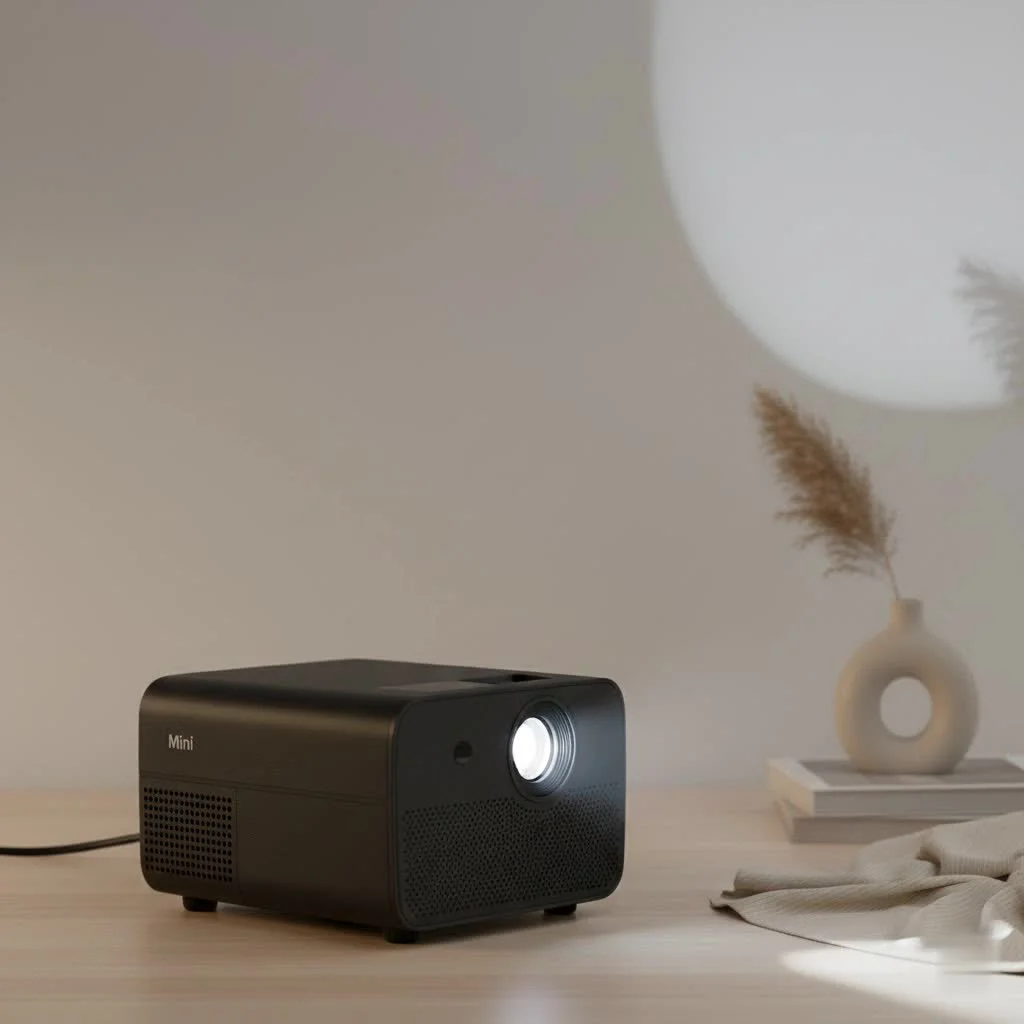
The appeal is obvious: a portable screen that can stretch to 100 inches or more for a fraction of the cost of a large TV. It’s perfect for movie nights, backyard gatherings, or even transforming a bedroom ceiling into a star-filled sky. However, it’s crucial to approach this market with realistic expectations. A projector under $100 won’t compete with a $1,000 home theater system, but it can offer an incredible experience if you know what to look for.
Are Cheap Mini Projectors Actually Worth It?
This is the most common question I get, and the answer is a qualified yes. A cheap mini projector is worth it if you understand its limitations and choose a model that aligns with your needs. Think of it as a secondary or novelty display device, not a replacement for your primary television. They excel in dark environments, for casual viewing, and for situations where portability is key. Where they often fall short is in bright rooms, audio quality, and true HD sharpness. The secret is to focus on the core features that matter and not get distracted by inflated marketing specs.
Key Features in a Cheap Mini Projector
When you’re on a tight budget, every feature counts. Forget the marketing jargon and focus on the specifications that directly impact your viewing experience. Here’s a breakdown of what you absolutely need to check before you click “buy.”
Brightness: The Truth About Lumens
Brightness is arguably the most critical factor for any projector, and it’s also the most confusing. You’ll see figures ranging from 1,000 to 10,000 lumens, but these are often “marketing lumens,” not the industry-standard ANSI lumens.
- What to Look For: A projector’s true brightness is measured in ANSI lumens. Most cheap projectors won’t list this, so you have to read between the lines. Look for models in the 100-300 ANSI lumens range. Anything less will be too dim for anything but a pitch-black room.
- Rule of Thumb: Higher listed “lumens” (even if not ANSI) from a reputable budget brand generally indicates a brighter picture. Be skeptical of unknown brands claiming impossibly high numbers for a low price.
- Best Use Case: A cheap mini projector is best used in a dark room with minimal ambient light. The darker the room, the more vibrant and clear the image will appear.
Resolution: Native vs. Supported
|
Our Picks for the Best Mini Projector in 2026
As an Amazon Associate I earn from qualifying purchases.
|
||
| Num | Product | Action |
|---|---|---|
| 1 | Magcubic Mini Projector with WiFi 6 and Bluetooth 5.4, Portable Projector 4K Support, 5W Soundbase Speaker, Auto Vertical Keystone 180°Rotatable Smart Proyector for Movie Home Outdoor |

|
| 2 | Aurzen EAZZE D1 Smart Projector with WiFi and Bluetooth, Netflix-Officially-Licensed, Auto Focus & Keystone, DoIby Audio, Native 1080P Movie, Portable Outdoor Mini Projector, White |
|
| 3 | Mini Portable Projector 4K WiFi 6 BT 5.2 Upgraded Portable Projector Full HD Supported for Phone /PC /TV /HDMI /PS5 /Laptop Auto Keystone Home Theater 180° Rotation [Built-in App] White |
|
| 4 | Aurzen Roku TV Smart Projector with Wifi and Bluetooth, Roku Streaming Experience Built-in, 1080P FHD, Dolby Audio, Auto Focus & Keystone, Zoom, Movie Portable Outdoor Mini Projector, White |
|
| 5 | 【Officially-Licensed APP & Native 1080P】Thinnest 1.81\" Smart Mini Projector with WiFi and Bluetooth, Auto Focus & Keystone Portable Outdoor Projector, VOPLLS 4K Support Home Movie Projector |
|
| 6 | [Short Throw/1200ANSI/Built in Apps] 4K Outdoor Projector with WiFi and Bluetooth, Auto Focus Projector with Dual-Mode Stand, Smart Portable Proyector with Netflix/YouTube/PrimeVideo & Dolby |
|
| 7 | [Compatible with Netflix & TOF Real-time Focus] Mini Projector with WiFi and Bluetooth, XuanPad Smart Projector 4K Support, Dolby Audio & Keystone, 210° Rotatable Stand for Home |
|
| 8 | SOOMFON Mini Projector 1080P Support - Portable Small Video Movie Projector Bluetooth 5.1 Auto Keystone Electric Focus for Bedroom/Wall/Home/Outdoor/iPhone/Android/TV Stick |
|
| 9 | [Built-in Apps & 2025 Upgraded] Mini Projector Support 4K 1080P Auto Keystone 270° Rotatable with WiFi 6 and Bluetooth 5.4, Projector Portable Compatibile with HDMI/TV Stick/Memory Stick/Laptop-Black |
|
| 10 | HAPPRUN Native 1080P Bluetooth Mini Projector, Full HD Portable Outdoor Movie Projector with Built-in Speaker, Compatible with Smartphone, HDMI, USB, AV, Fire Stick, PS5 for Home, Bedroom, Outdoor Use |
|
Resolution determines the clarity and sharpness of the image. This is another area where manufacturers can be misleading.
- Native Resolution: This is the true resolution of the projector’s internal display chip. It’s the most important number. For a decent budget experience, look for a native resolution of at least 480p (854×480). If your budget can stretch a bit, a native 720p (1280×720) projector will offer a significant upgrade in sharpness.
- Supported Resolution: This means the projector can accept a higher-resolution signal (like 1080p or 4K) but will downscale it to its lower native resolution. The image will not be true 1080p. Don’t be fooled by a listing that screams “1080p Supported!” while hiding a 360p native resolution in the fine print.
As our lead product analyst at Flasf, David Chen, often says, “Native resolution is the foundation of your image quality. Supporting a higher resolution is like pouring premium fuel into a standard engine—it runs, but you’re not getting the premium performance.”
Connectivity: Your Gateway to Content
A projector is useless if you can’t connect your devices to it. Modern cheap projectors offer a surprising number of options.
- Wired Connections: HDMI is the gold standard and an absolute must-have. It allows you to easily connect laptops, gaming consoles, Blu-ray players, and streaming sticks like a Roku or Amazon Fire Stick. USB ports are also crucial for playing media files directly from a flash drive.
- Wireless Connections: Many budget models now include Wi-Fi and Bluetooth. Wi-Fi allows for screen mirroring from your smartphone or laptop, which is incredibly convenient. Bluetooth lets you connect to an external speaker or headphones, which is a lifesaver given the typically poor quality of built-in speakers.
Portability and Power
The “mini” in cheap mini projector implies portability. If you plan to take it on the go, consider these factors:
- Size and Weight: Check the dimensions and weight to ensure it fits your travel needs.
- Battery: Many of the cheapest models do not have a built-in battery and must be plugged in. If you want true portability for backyard movies, look for a model with an integrated battery. Check the rated battery life—anything over 2 hours is decent for a movie.
- Power Source: Some can be powered via a USB-C power bank, adding another layer of flexibility.
Common Pitfalls to Avoid
- Ignoring Native Resolution: Falling for the “1080p Supported” trick is the number one mistake. Always find the native resolution.
- Expecting Daylight Viewing: No cheap mini projector is powerful enough to produce a clear image in a bright, sunlit room. Keep your expectations grounded in reality.
- Relying on Built-in Speakers: The audio from built-in speakers is almost universally weak and tinny. Plan on using an external Bluetooth speaker or headphones for an immersive experience.
- Forgetting Keystone Correction: Keystone correction allows you to adjust the image if the projector isn’t placed perfectly perpendicular to the screen. Look for at least vertical keystone correction to avoid a trapezoidal-shaped picture.
How to Get the Most Out of Your Projector
Once you’ve chosen your device, a few simple tricks can dramatically improve the experience.
- Use a Proper Screen: While a blank wall works, a dedicated projector screen (even a cheap one) will significantly boost brightness and contrast.
- Find the Sweet Spot: Experiment with the distance to the screen. Placing the projector closer will result in a smaller but brighter and sharper image.
- Use a Streaming Stick: Plugging in an Amazon Fire Stick or Roku transforms your projector into a smart TV, giving you easy access to Netflix, YouTube, and other services without needing to connect a phone or laptop.
Frequently Asked Questions (FAQ)
What is a good cheap mini projector for outdoor movies?
For outdoor use, prioritize brightness and battery life. Look for a model that has at least 200 ANSI lumens (or a high “marketing lumen” rating) and a built-in battery that lasts over two hours. Also, ensure you have a good Bluetooth speaker to overcome outdoor noise.
Can I use a cheap mini projector for gaming?
Yes, you can, but it’s best for casual gaming. Competitive gamers may notice input lag. For the best experience, connect your console directly via HDMI and use a dedicated gaming mode if the projector has one.
How do I connect my iPhone or Android to the projector?
If the projector has Wi-Fi, you can use screen mirroring (AirPlay for iPhone, Miracast/Smart View for Android). For a more stable connection, using a wired adapter like a Lightning-to-HDMI for iPhone or a USB-C-to-HDMI for Android is the best option.
Do the bulbs in these projectors burn out quickly?
Most modern mini projectors use LED light sources, which have an incredibly long lifespan, often rated for 20,000 to 50,000 hours. You will likely replace the entire projector before the LED bulb ever burns out.
Is a 480p native resolution good enough for watching movies?
For casual viewing on a smaller screen size (under 80 inches) in a dark room, 480p can be surprisingly enjoyable and is perfectly acceptable for a cheap mini projector. However, if you are a stickler for image quality or want a larger screen, aim for a native 720p model.
Your Pocket-Sized Cinema Awaits
Choosing a cheap mini projector doesn’t have to be a gamble. By focusing on the essential features like native resolution and practical brightness, and by understanding the necessary compromises, you can find a device that offers tremendous fun and value. It can bring family and friends together for a unique movie night, add a new dimension to your gaming, or simply provide a relaxing escape. Armed with this knowledge, you are now ready to step into the exciting world of portable projection and find the perfect model to light up your life, one giant screen at a time.
Frequently Asked Questions
What is a good cheap mini projector for outdoor movies?
For outdoor use, prioritize brightness and battery life. Look for a model with at least 200 ANSI lumens and a built-in battery that lasts over two hours. Additionally, ensure you have a good Bluetooth speaker to overcome outdoor noise and enhance the audio experience.
Can I use a cheap mini projector for gaming?
Yes, you can use a cheap mini projector for casual gaming. Competitive gamers may notice input lag, so it's not ideal for fast-paced, high-stakes games. For the best experience, connect your console directly via HDMI and utilize any dedicated gaming mode the projector might offer.
How do I connect my iPhone or Android to a mini projector?
If the projector has Wi-Fi, you can use screen mirroring features like AirPlay for iPhone or Miracast/Smart View for Android. For a more stable and reliable connection, using a wired adapter such as a Lightning-to-HDMI for iPhone or a USB-C-to-HDMI for Android is the best option.
Do the bulbs in cheap mini projectors burn out quickly?
No, most modern mini projectors use LED light sources, which have an incredibly long lifespan, often rated for 20,000 to 50,000 hours. You are highly likely to replace the entire projector due to technological advancements or wear and tear before the LED bulb ever burns out.
Is a 480p native resolution good enough for watching movies?
For casual viewing on a smaller screen size (under 80 inches) in a dark room, a 480p native resolution can be surprisingly enjoyable and is perfectly acceptable for a cheap mini projector. However, if you prioritize image quality or desire a larger screen, aiming for a native 720p model will provide a significant upgrade in sharpness.
Get our weekly buyer guide
Practical specs, not advice. Unsubscribe anytime.
I was skeptical about getting a projector for under $100, but this guide really helped me set realistic expectations. I ended up getting one for backyard movie nights, and it’s been a huge hit! The picture quality is surprisingly good in the dark, and it’s so easy to set up. Definitely worth it for casual viewing.
I’ve been wanting a large screen for gaming but didn’t want to spend a fortune on a TV. This guide convinced me to try a mini projector, and I’m so glad I did! It’s amazing how a device under $100 can project such a large image. My bedroom ceiling is now my personal cinema. Highly recommend for anyone on a budget.
This was super helpful in understanding what to look for in a cheap mini projector. I travel a lot for work and wanted something to watch movies on in hotel rooms. The tip about understanding limitations was key. It’s perfect for transforming a blank wall into a big screen, and it’s so compact. Just remember it needs a dark room!
I picked up a mini projector after reading about focusing on native resolution. While it’s great for portability and works okay in a completely dark room, the audio quality is definitely a weak point. I have to use an external speaker every time, which is a bit of a hassle. It’s fine for the price, but don’t expect amazing sound.