A mini projector full HD 1080p can improve your entertainment experience by delivering a large-screen display in a portable package. The most crucial factor when selecting one is its native resolution, which must be 1920×1080 pixels for true Full HD. Many brands market “1080p supported” projectors, which downscale the image from a lower native resolution, resulting in a significantly softer picture.
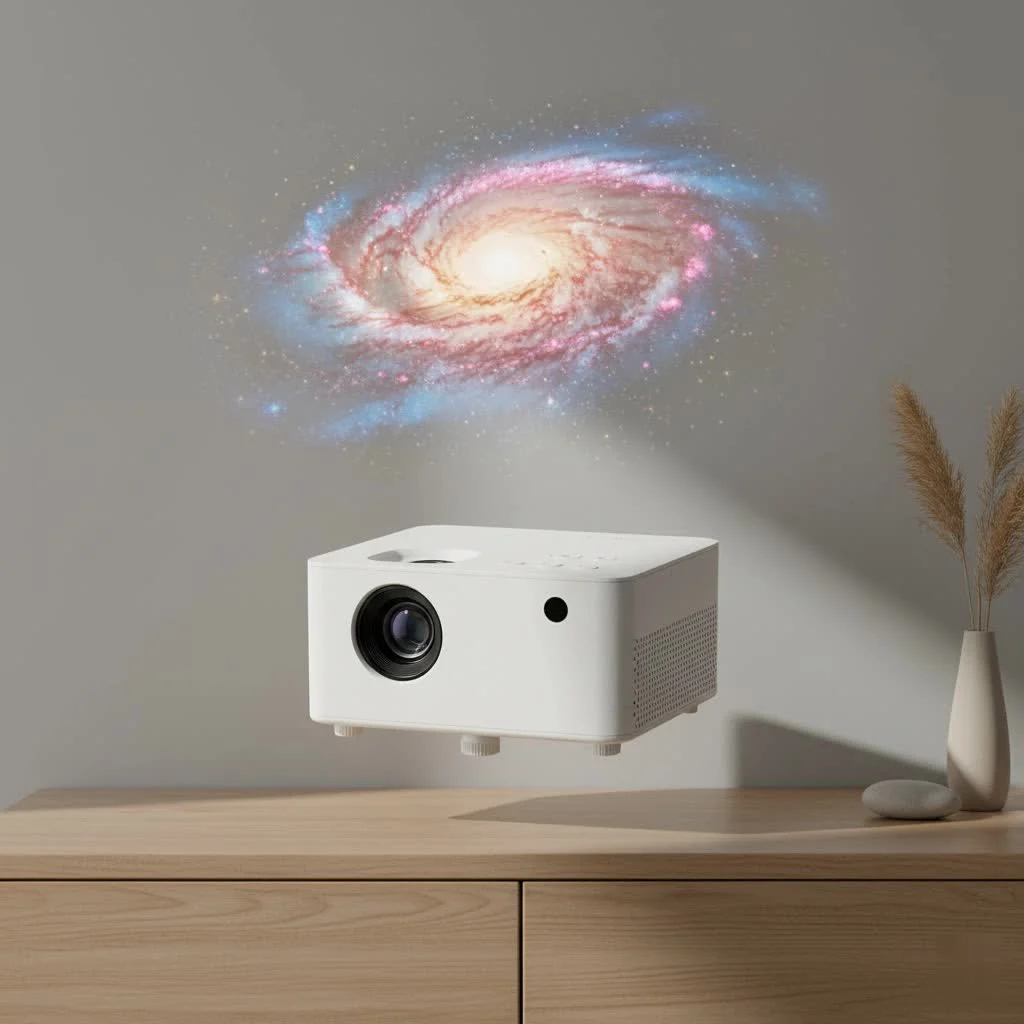
This guide will clarify the technology, helping you choose the ideal portable cinema for spontaneous movie nights or gaming sessions. For best portable mini roundups on this site.
The Critical Difference: Native vs. Supported 1080p
The single most important factor when choosing a mini projector full HD 1080p is understanding the difference between “native” and “supported” resolution. This marketing tactic often misleads even experienced buyers.
A projector’s native resolution refers to the actual, physical number of pixels on its display chip. For a native Full HD 1080p projector, this is 1920 pixels horizontally by 1080 pixels vertically. This allows it to display a 1080p video signal pixel-for-pixel, producing a crisp, clear, and detailed image.
Conversely, supported resolution means the projector can accept a 1080p signal, but it lacks sufficient physical pixels to display it properly. It downscales the high-resolution input to fit its lower native resolution (often 480p or 720p). The outcome is a noticeably softer, less detailed image that is not true Full HD.
Expert Take: “Always look for the ‘native resolution’ in the product specifications,” advises David Chen, head technician at Flasf.com. “If a listing only states ‘1080p supported’ or ‘supports 1080p,’ you are not acquiring a true Full HD projector. The difference in clarity is substantial.”
Key Features for a Flawless Picture
Beyond resolution, several other elements contribute to an excellent viewing experience. Here’s what to consider when shopping for a mini projector full HD 1080p.
Brightness: Understanding Lumens
Brightness is arguably the second most important feature after native resolution. It determines how visible and vibrant your image will be, especially in rooms that aren’t perfectly dark. Projector brightness is measured in lumens. However, you’ll encounter different units:
- ANSI Lumens: This is the standardized, most reliable measurement of brightness. It accurately reflects how bright the image will appear in a real-world setting.
- LED Lumens or Light Source Lumens: These numbers are often inflated for marketing purposes and can be 5 to 10 times higher than the actual ANSI lumen rating. Always prioritize the ANSI lumen rating for an accurate comparison.
For a mini projector, a rating of 300-500 ANSI lumens is an excellent starting point for dark rooms, while 500 ANSI lumens or more will perform better in rooms with some ambient light.
Contrast Ratio: The Depth of Your Image
|
Our Picks for the Best Mini Projector in 2026
As an Amazon Associate I earn from qualifying purchases.
|
||
| Num | Product | Action |
|---|---|---|
| 1 | [Short Throw/1200ANSI/Built in Apps] 4K Outdoor Projector with WiFi and Bluetooth, Auto Focus Projector with Dual-Mode Stand, Smart Portable Proyector with Netflix/YouTube/PrimeVideo & Dolby |
![Check [Short Throw/1200ANSI/Built in Apps] 4K Outdoor Projector with WiFi and Bluetooth, Auto Focus Projector with Dual-Mode Stand, Smart Portable Proyector with Netflix/YouTube/PrimeVideo & Dolby on Amazon](https://flasf.com/wp-content/plugins/amazon-tables/assets/images/buy.png)
|
| 2 | [Compatible with Netflix & TOF Real-time Focus] Mini Projector with WiFi and Bluetooth, XuanPad Smart Projector 4K Support, Dolby Audio & Keystone, 210° Rotatable Stand for Home |
|
| 3 | HAPPRUN Native 1080P Bluetooth Mini Projector, Full HD Portable Outdoor Movie Projector with Built-in Speaker, Compatible with Smartphone, HDMI, USB, AV, Fire Stick, PS5 for Home, Bedroom, Outdoor Use |
|
| 4 | Magcubic Mini Projector with WiFi 6 and Bluetooth 5.4, Portable Projector 4K Support, 5W Soundbase Speaker, Auto Vertical Keystone 180°Rotatable Smart Proyector for Movie Home Outdoor |
|
| 5 | [Built-in Apps & 2025 Upgraded] Mini Projector Support 4K 1080P Auto Keystone 270° Rotatable with WiFi 6 and Bluetooth 5.4, Projector Portable Compatibile with HDMI/TV Stick/Memory Stick/Laptop-Black |
|
| 6 | Aurzen Roku TV Smart Projector with Wifi and Bluetooth, Roku Streaming Experience Built-in, 1080P FHD, Dolby Audio, Auto Focus & Keystone, Zoom, Movie Portable Outdoor Mini Projector, White |
|
| 7 | Aurzen EAZZE D1 Smart Projector with WiFi and Bluetooth, Netflix-Officially-Licensed, Auto Focus & Keystone, DoIby Audio, Native 1080P Movie, Portable Outdoor Mini Projector, White |
|
| 8 | Mini Portable Projector 4K WiFi 6 BT 5.2 Upgraded Portable Projector Full HD Supported for Phone /PC /TV /HDMI /PS5 /Laptop Auto Keystone Home Theater 180° Rotation [Built-in App] White |
|
| 9 | 【Officially-Licensed APP & Native 1080P】Thinnest 1.81\" Smart Mini Projector with WiFi and Bluetooth, Auto Focus & Keystone Portable Outdoor Projector, VOPLLS 4K Support Home Movie Projector |
|
| 10 | SOOMFON Mini Projector 1080P Support - Portable Small Video Movie Projector Bluetooth 5.1 Auto Keystone Electric Focus for Bedroom/Wall/Home/Outdoor/iPhone/Android/TV Stick |
|
Contrast ratio measures the difference between the darkest black and the brightest white a projector can produce. A higher contrast ratio means deeper blacks, brighter whites, and more visual impact in the image. For a mini projector, a contrast ratio of 2000:1 or higher is recommended for a cinematic feel.
Connectivity: The Modern Essentials
A projector is ineffective if you cannot connect your devices. Look for a versatile mix of modern connectivity options:
- HDMI: The essential standard for connecting laptops, gaming consoles (like PlayStation and Xbox), and streaming sticks (like Roku or Amazon Fire TV).
- Wi-Fi: Crucial for smart projectors with built-in operating systems and streaming apps such as Netflix or YouTube. It also enables screen mirroring from your smartphone or tablet.
- Bluetooth: This allows wireless connection to external speakers or headphones, a significant upgrade over typically weak built-in speakers.
Portability and Power
The “mini” in mini projector implies portability. Consider the device’s size, weight, and whether it includes a built-in battery. A battery-powered projector offers true go-anywhere convenience, ideal for camping trips or backyard movie nights. Check the battery life—two hours is the minimum for watching a full movie without needing to plug it in.
Setting Up for Success: Tips and Tricks
Achieving a great image depends on both the projector and the setup.
- Control the Light: The darker the room, the better your picture will look. Use blackout curtains for the best home cinema experience.
- Find the Right Surface: While a plain white wall can work, a dedicated projector screen is designed to reflect light more effectively, enhancing brightness and color accuracy.
- Get the Angle Right: Use keystone correction to fix a distorted image if the projector is not placed perfectly perpendicular to the screen. Many modern projectors feature auto-keystone for automatic adjustment.
- the Audio: The built-in speakers on most mini projectors are merely adequate. For an immersive experience, connect to a Bluetooth speaker or a soundbar.
Frequently Asked Questions (FAQ)
Can a mini projector full HD 1080p replace my TV?
For many, it can. A 1080p mini projector can create a much larger screen size, often 100 inches or more, for a fraction of the cost of a large TV. However, TVs are generally brighter and perform better in daylight, making them more suitable for casual daytime viewing.
How many lumens do I really need?
For a dark room, 300-500 ANSI lumens is sufficient for a great picture. If you plan to watch with some ambient light or during dusk, aim for 500 ANSI lumens or more to ensure adequate brightness.
What is the difference between LCD and DLP projectors?
DLP (Digital Light Processing) projectors often provide deeper blacks and a smoother image for fast-motion content like sports or gaming. LCD (Liquid Crystal Display) projectors tend to have more saturated, vibrant colors. Both technologies are capable of producing excellent 1080p images.
Do I absolutely need a projector screen?
No, but it is highly recommended. A dedicated screen has a special coating that improves reflectivity and diffuses light evenly, resulting in a brighter, more uniform, and more color-accurate image than a painted wall.
How long does the light source in a a mini projector last?
Most modern mini projectors use an LED light source, which has a very long lifespan. You can expect 20,000 to 30,000 hours of use, meaning you could watch a two-hour movie every day for over 25 years before the lamp needs replacing.
Your Pocket-Sized Cinema Awaits
Choosing the right mini projector full HD 1080p unlocks a world of flexible, large-screen entertainment. By focusing on essentials—prioritizing native 1080p resolution, securing enough ANSI lumens for your space, and ensuring proper connectivity—you can avoid marketing pitfalls and find a device that delivers a truly stunning cinematic experience. You now have the knowledge to make an informed decision and bring the magic of movies wherever you go.
Frequently Asked Questions
Can a mini projector full HD 1080p replace my television?
For many users, a 1080p mini projector can replace a TV, offering a much larger screen size, often 100 inches or more, at a lower cost. However, traditional TVs generally provide superior brightness and perform better in well-lit environments, making them more suitable for casual daytime viewing.
How many ANSI lumens are truly necessary for a mini projector?
For optimal viewing in a dark room, 300-500 ANSI lumens are sufficient for a great picture. If you intend to use the projector in rooms with some ambient light or during dusk, aiming for 500 ANSI lumens or more will ensure adequate brightness and image clarity.
What is the main difference between LCD and DLP projector technologies?
DLP (Digital Light Processing) projectors typically offer deeper blacks and a smoother image, which is beneficial for fast-motion content like sports or gaming. LCD (Liquid Crystal Display) projectors, on the other hand, tend to produce more saturated and vibrant colors. Both technologies are capable of delivering excellent 1080p images.
Is a dedicated projector screen absolutely necessary for good image quality?
While not strictly necessary, a dedicated projector screen is highly recommended for optimal image quality. These screens feature a special coating that significantly improves reflectivity and diffuses light evenly, resulting in a brighter, more uniform, and more color-accurate image compared to a plain painted wall.
What is the expected lifespan of a mini projector's light source?
Most modern mini projectors utilize an LED light source, which boasts a very long lifespan. You can typically expect 20,000 to 30,000 hours of use. This means you could watch a two-hour movie every day for over 25 years before the lamp would need replacing.
Get our weekly buyer guide
Practical specs, not advice. Unsubscribe anytime.
I was so confused about native vs. supported 1080p before reading this! It really helped me understand why some projectors looked blurry even when they claimed to be HD. I ended up getting one with true 1920×1080 native resolution, and the difference is incredible. Movie nights are so much better now, even just projecting onto a wall.
I got a mini projector after reading about how great they are for spontaneous movie nights. The portability is fantastic, and it’s easy to set up. However, I found that in a brightly lit room, the image is pretty washed out. You really need a dark environment to get a good picture, which wasn’t quite what I expected for casual daytime use. It’s fine for evening, though.
Finally, a clear explanation of what to look for in a mini projector! I almost fell for the ‘1080p supported’ trick, but this guide saved me. I invested in a slightly more expensive model with true native 1080p, and the clarity is amazing. It’s perfect for taking on camping trips or just setting up a quick outdoor cinema in the backyard.
This guide was super helpful for picking out a mini projector for my gaming setup. I needed something portable for when I visit friends, and the focus on actual Full HD made a huge difference. The picture quality is really sharp for gaming, though I do wish the built-in speaker was a bit louder. Still, totally worth it for the portability and clear image.