Welcome to the world of big-screen entertainment, untethered. If you’ve ever dreamt of hosting a movie night in your backyard or giving a slick presentation without a web of cables, you’ve likely come across the Projector Mini Wifi. These compact powerhouses have revolutionized how we share and view content, packing a home theater experience into a device that can fit in your backpack. As the founder of Flasf.com and a decade-long enthusiast in the mini projector space, I’m here to demystify this technology for you.
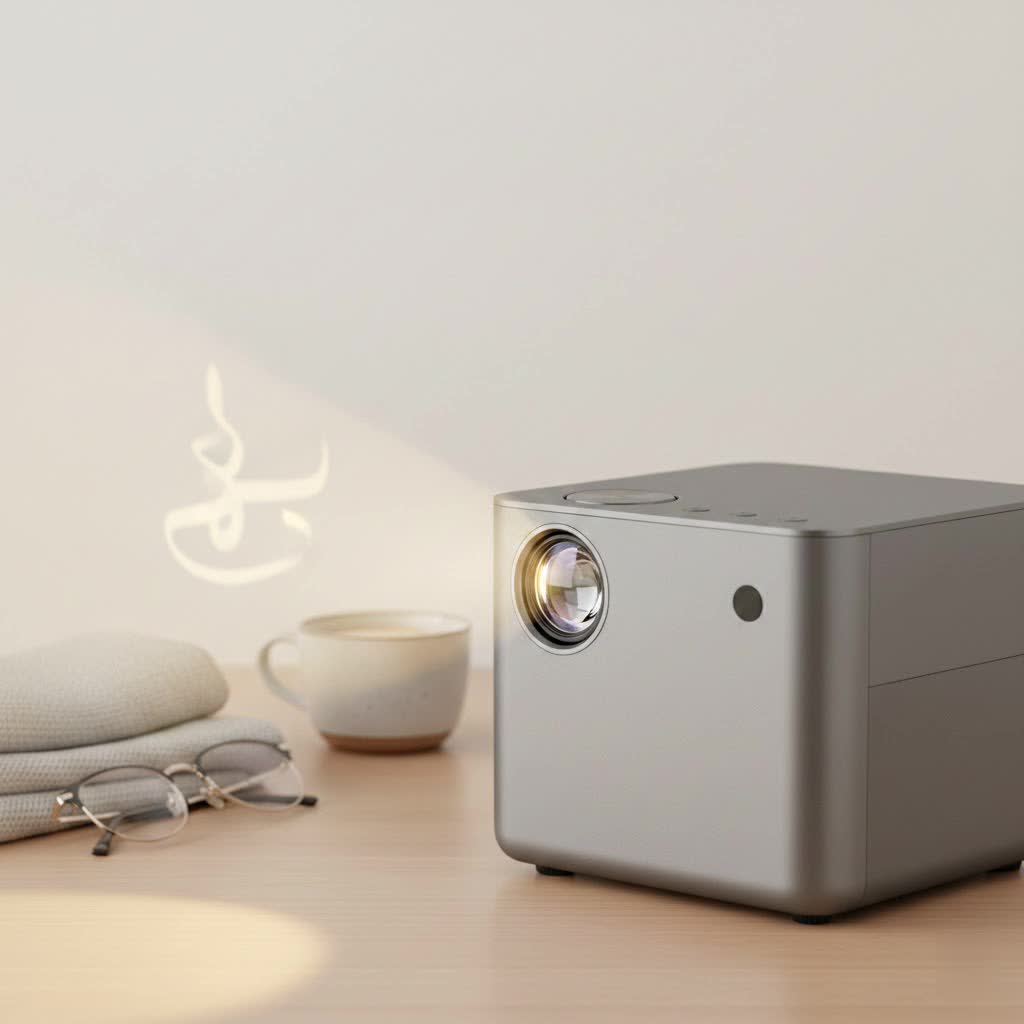
A projector mini wifi is exactly what it sounds like: a small, portable projector equipped with built-in Wi-Fi capabilities. This single feature unlocks a new level of convenience, allowing you to stream content directly from your phone, tablet, or laptop wirelessly. Gone are the days of searching for the right HDMI adapter or tripping over long cables. With a wireless connection, you can mirror your device’s screen or cast content from popular apps in seconds, creating a seamless link between your digital world and a massive projected image.
How Does a Mini Wifi Projector Work?
Understanding the magic behind wireless projection is simple. A projector mini wifi primarily uses two methods to connect to your devices: screen mirroring and network streaming. Think of it as a smart TV, but one that can create a 100-inch screen on any wall.
Screen Mirroring (Direct Connection)
|
Our Picks for the Best Mini Projector in 2026
As an Amazon Associate I earn from qualifying purchases.
|
||
| Num | Product | Action |
|---|---|---|
| 1 | Magcubic Mini Projector with WiFi 6 and Bluetooth 5.4, Portable Projector 4K Support, 5W Soundbase Speaker, Auto Vertical Keystone 180°Rotatable Smart Proyector for Movie Home Outdoor |

|
| 2 | [Short Throw/1200ANSI/Built in Apps] 4K Outdoor Projector with WiFi and Bluetooth, Auto Focus Projector with Dual-Mode Stand, Smart Portable Proyector with Netflix/YouTube/PrimeVideo & Dolby |
|
| 3 | HAPPRUN Native 1080P Bluetooth Mini Projector, Full HD Portable Outdoor Movie Projector with Built-in Speaker, Compatible with Smartphone, HDMI, USB, AV, Fire Stick, PS5 for Home, Bedroom, Outdoor Use |
|
| 4 | Aurzen EAZZE D1 Smart Projector with WiFi and Bluetooth, Netflix-Officially-Licensed, Auto Focus & Keystone, DoIby Audio, Native 1080P Movie, Portable Outdoor Mini Projector, White |
|
| 5 | Mini Portable Projector 4K WiFi 6 BT 5.2 Upgraded Portable Projector Full HD Supported for Phone /PC /TV /HDMI /PS5 /Laptop Auto Keystone Home Theater 180° Rotation [Built-in App] White |
|
| 6 | Aurzen Roku TV Smart Projector with Wifi and Bluetooth, Roku Streaming Experience Built-in, 1080P FHD, Dolby Audio, Auto Focus & Keystone, Zoom, Movie Portable Outdoor Mini Projector, White |
|
| 7 | [Compatible with Netflix & TOF Real-time Focus] Mini Projector with WiFi and Bluetooth, XuanPad Smart Projector 4K Support, Dolby Audio & Keystone, 210° Rotatable Stand for Home |
|
| 8 | SOOMFON Mini Projector 1080P Support - Portable Small Video Movie Projector Bluetooth 5.1 Auto Keystone Electric Focus for Bedroom/Wall/Home/Outdoor/iPhone/Android/TV Stick |
|
| 9 | 【Officially-Licensed APP & Native 1080P】Thinnest 1.81\" Smart Mini Projector with WiFi and Bluetooth, Auto Focus & Keystone Portable Outdoor Projector, VOPLLS 4K Support Home Movie Projector |
|
| 10 | [Built-in Apps & 2025 Upgraded] Mini Projector Support 4K 1080P Auto Keystone 270° Rotatable with WiFi 6 and Bluetooth 5.4, Projector Portable Compatibile with HDMI/TV Stick/Memory Stick/Laptop-Black |
|
Most mini projectors with Wi-Fi can create their own wireless network. You connect your smartphone or laptop directly to the projector’s Wi-Fi signal, much like you would connect to any other hotspot. Technologies like Miracast (for Android/Windows) and AirPlay (for Apple devices) then allow you to “mirror” your screen. Whatever you see on your device’s display is duplicated by the projector in real-time. This is incredibly useful for presentations, photo slideshows, or streaming content stored directly on your device.
Connecting to Your Home Network
For a more stable and versatile experience, you can connect the projector mini wifi to your home or office Wi-Fi network—the same one your phone and computer use. Once on the same network, the devices can communicate seamlessly. This method is often more reliable for streaming from online services like YouTube or Netflix, as it leverages your internet connection directly, preventing interruptions if you receive a call or text on your phone.
Key Features to Look For in a Projector Mini Wifi
Navigating the market can be tricky, with specs and features thrown at you from every direction. As an expert, I advise focusing on the fundamentals that truly impact your viewing experience.
1. Brightness and Resolution: The Core of Quality
- Brightness (Lumens): This is arguably the most critical factor. Measured in lumens, brightness determines how visible the image will be, especially in rooms that aren’t completely dark. For a mini projector, look for at least 200-500 ANSI lumens for decent performance in dim lighting. Anything less might leave you with a washed-out image.
- Native Resolution: Don’t be fooled by “supported resolution.” What matters is the native resolution—the actual number of pixels the projector uses to create the image. For a crisp, clear picture, aim for a native resolution of at least 720p (1280×720). If your budget allows, a 1080p (1920×1080) native resolution will provide a significantly sharper and more detailed image.
2. Connectivity: Beyond Just Wifi
While Wi-Fi is the star feature, good connectivity is about having options. A solid projector mini wifi should also include:
- HDMI: Essential for connecting gaming consoles, Blu-ray players, or laptops for a zero-latency connection.
- USB: Allows you to play movies, music, or view photos directly from a flash drive.
- Bluetooth: This is a huge plus. It lets you connect the projector to external speakers or headphones for a much more immersive audio experience, as built-in speakers are often quite basic.
As my colleague, audio-visual specialist John Carter, often says, “A great picture deserves great sound. A projector with Bluetooth isn’t just a convenience; it’s the key to transforming a simple viewing into a cinematic event.”
3. Portability and Battery Life
The “mini” in the name implies portability. Check the projector’s weight and dimensions to ensure it fits your needs. More importantly, if you plan to use it outdoors or away from a power outlet, a built-in battery is a must. Look for a battery that offers at least 2-3 hours of playback time, which is enough to get through most feature films.
Step-by-Step: Setting Up Your Mini Wifi Projector
Getting started is usually straightforward. Here’s a simple guide to get you up and running in minutes.
- Power On and Position: Place the projector on a stable surface and aim it at your desired screen or wall. Power it on.
- Focus and Keystoning: Adjust the focus ring until the image is sharp. Most projectors also have a keystone correction feature (either manual or automatic) to fix image distortion if the projector isn’t perfectly perpendicular to the screen.
- Connect to Wi-Fi: Navigate to the projector’s settings menu using the remote. Select the network settings and connect to your home Wi-Fi network by entering the password.
- Select Your Source: Go to the projector’s home screen and choose the screen mirroring or casting option.
- Connect Your Device:
- For iPhone/iPad (AirPlay): Open the Control Center, tap “Screen Mirroring,” and select the projector from the list.
- For Android/Windows (Miracast): Open your device’s casting or screen sharing settings (often called “Smart View,” “Cast,” or “Wireless Display”) and select the projector.
- Start Streaming: Your device’s screen should now be projected. Open any app or video and enjoy it on the big screen!
Pro Tip: For the best streaming experience, especially with high-definition content, ensure both your projector and your streaming device are connected to the 5GHz Wi-Fi band if available. It offers faster speeds and less interference than the 2.4GHz band.
Frequently Asked Questions (FAQ)
Can I watch Netflix or other protected content?
This is a common stumbling block. Due to DRM (Digital Rights Management) restrictions, many streaming apps like Netflix block screen mirroring from mobile devices. To get around this, you can connect a streaming stick like a Roku, Amazon Fire TV Stick, or Google Chromecast to the projector’s HDMI port. These devices handle the streaming independently and work perfectly.
How do I improve the audio quality?
The built-in speakers on most mini projectors are functional but lack power and depth. The best solution is to use the projector’s Bluetooth capability to connect to a portable speaker or a soundbar. This will elevate your audio to match the large-screen visuals.
Is a projector mini wifi good for gaming?
For casual gaming, yes. However, for fast-paced, competitive gaming, the slight delay (latency) introduced by a wireless connection can be a disadvantage. For the best gaming experience, it’s recommended to connect your console directly to the projector using an HDMI cable.
Do I need a dedicated screen?
While a dedicated projector screen will always provide the best image quality, it’s not strictly necessary. A smooth, white, or light-colored wall will work just fine for casual viewing. Avoid textured walls, as they can disrupt the image.
Can I use the projector during the day?
This depends entirely on the projector’s brightness (lumens). Most mini projectors perform best in dark or dimly lit environments. Even a high-lumen model will struggle to produce a vibrant image in a brightly lit room or direct sunlight. For daytime viewing, you’ll need to manage ambient light by closing curtains or blinds.
Final Thoughts
The projector mini wifi is a game-changer for anyone who loves flexible, on-the-go entertainment. It combines the portability of a small device with the power of wireless streaming, making it easier than ever to share moments, presentations, and movie nights. By focusing on core specs like native resolution, ANSI lumens, and versatile connectivity options, you can find a model that perfectly suits your needs. Now, grab some popcorn, connect your device, and get ready to transform any space into your personal cinema.
