Ever dreamed of having your own home theater but winced at the thought of the price tag? What if you could bring that massive-screen experience to your living room, backyard, or even a camping trip without breaking the bank? That’s the magic of an affordable mini projector. These compact powerhouses have revolutionized home entertainment, making big-screen fun more accessible than ever. But with a sea of options online, how do you pick a winner instead of a dud? As a decade-long expert in this field, I’m here to guide you through everything you need to know.
What Exactly Defines an Affordable Mini Projector?
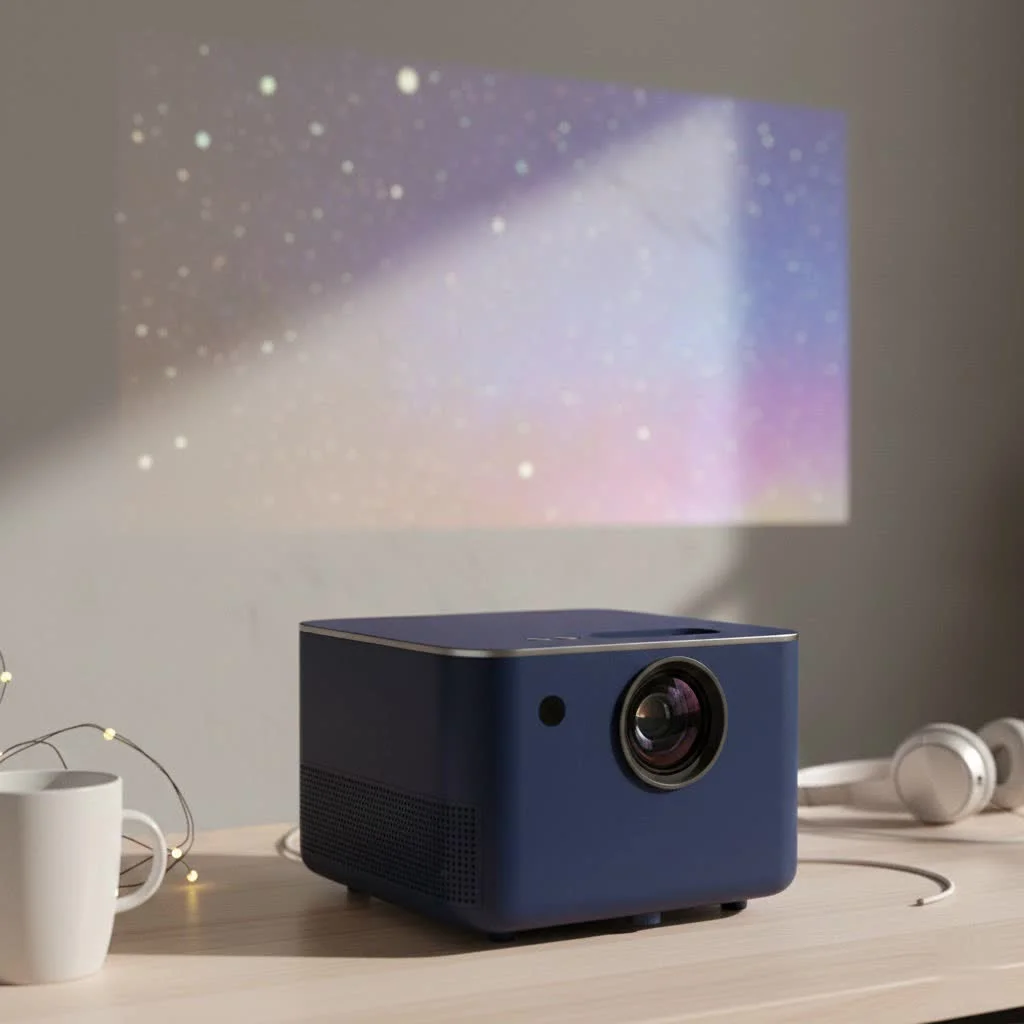
Let’s clear the air first. When we talk about “affordable,” we’re generally looking at devices priced under $200, with many solid options available for less than $100. These aren’t the powerhouse 4K projectors you’d find in a dedicated home cinema. Instead, they are ultra-portable, often battery-powered devices designed for convenience and casual viewing.
It’s crucial to set realistic expectations. An affordable mini projector is perfect for a movie night in a dark room, projecting a fun display for a party, or keeping the kids entertained. It is not designed to replace a high-end TV in a brightly lit room. Think of it as a fun, versatile gadget that delivers impressive results for its price.
Key Features to Look for in an Affordable Mini Projector
Navigating the technical specs can feel overwhelming, but it’s simple once you know what matters. Many brands use confusing marketing terms, so let’s focus on the numbers and features that genuinely impact your viewing experience.
Brightness: The Battle of the Lumens
Brightness is arguably the most critical factor for any projector, and it’s measured in ANSI lumens. This is a standardized measurement, and you should be wary of any product that lists “lumens” or “lux” without the “ANSI” prefix, as those figures are often inflated.
- Under 500 ANSI Lumens: This is common in the most budget-friendly models. A projector in this range is only suitable for very dark rooms. Any ambient light will wash out the image significantly.
- 500-1000 ANSI Lumens: This is a much better range for a mini projector, offering more flexibility. You can get a decent, vibrant picture in a dimly lit room, not just complete darkness.
Resolution: Native vs. Supported
This is where many buyers get tricked. A projector might claim it “supports 1080p” or “4K,” but the number that truly matters is the native resolution.
- Native Resolution: This is the actual number of physical pixels the projector has. For the affordable category, a native resolution of 720p (1280×720) is a great target. True native 1080p (1920×1080) is becoming more common but expect to pay a bit more.
- Supported Resolution: This just means the projector can receive a higher-resolution signal (like from a Blu-ray player) and downscale it to fit its native pixel count. The image will not be true 1080p or 4K.
Connectivity: Your Gateway to Content
|
Our Picks for the Best Mini Projector in 2026
As an Amazon Associate I earn from qualifying purchases.
|
||
| Num | Product | Action |
|---|---|---|
| 1 | Mini Portable Projector 4K WiFi 6 BT 5.2 Upgraded Portable Projector Full HD Supported for Phone /PC /TV /HDMI /PS5 /Laptop Auto Keystone Home Theater 180° Rotation [Built-in App] White |
![Check Mini Portable Projector 4K WiFi 6 BT 5.2 Upgraded Portable Projector Full HD Supported for Phone /PC /TV /HDMI /PS5 /Laptop Auto Keystone Home Theater 180° Rotation [Built-in App] White on Amazon](https://flasf.com/wp-content/plugins/amazon-tables/assets/images/buy.png)
|
| 2 | [Short Throw/1200ANSI/Built in Apps] 4K Outdoor Projector with WiFi and Bluetooth, Auto Focus Projector with Dual-Mode Stand, Smart Portable Proyector with Netflix/YouTube/PrimeVideo & Dolby |
|
| 3 | 【Officially-Licensed APP & Native 1080P】Thinnest 1.81\" Smart Mini Projector with WiFi and Bluetooth, Auto Focus & Keystone Portable Outdoor Projector, VOPLLS 4K Support Home Movie Projector |
|
| 4 | Magcubic Mini Projector with WiFi 6 and Bluetooth 5.4, Portable Projector 4K Support, 5W Soundbase Speaker, Auto Vertical Keystone 180°Rotatable Smart Proyector for Movie Home Outdoor |
|
| 5 | SOOMFON Mini Projector 1080P Support - Portable Small Video Movie Projector Bluetooth 5.1 Auto Keystone Electric Focus for Bedroom/Wall/Home/Outdoor/iPhone/Android/TV Stick |
|
| 6 | [Compatible with Netflix & TOF Real-time Focus] Mini Projector with WiFi and Bluetooth, XuanPad Smart Projector 4K Support, Dolby Audio & Keystone, 210° Rotatable Stand for Home |
|
| 7 | [Built-in Apps & 2025 Upgraded] Mini Projector Support 4K 1080P Auto Keystone 270° Rotatable with WiFi 6 and Bluetooth 5.4, Projector Portable Compatibile with HDMI/TV Stick/Memory Stick/Laptop-Black |
|
| 8 | HAPPRUN Native 1080P Bluetooth Mini Projector, Full HD Portable Outdoor Movie Projector with Built-in Speaker, Compatible with Smartphone, HDMI, USB, AV, Fire Stick, PS5 for Home, Bedroom, Outdoor Use |
|
| 9 | Aurzen EAZZE D1 Smart Projector with WiFi and Bluetooth, Netflix-Officially-Licensed, Auto Focus & Keystone, DoIby Audio, Native 1080P Movie, Portable Outdoor Mini Projector, White |
|
| 10 | Aurzen Roku TV Smart Projector with Wifi and Bluetooth, Roku Streaming Experience Built-in, 1080P FHD, Dolby Audio, Auto Focus & Keystone, Zoom, Movie Portable Outdoor Mini Projector, White |
|
A projector is useless if you can’t connect your devices to it. Look for a variety of ports to ensure maximum compatibility.
- HDMI: This is the most essential port. It allows you to connect laptops, gaming consoles, streaming sticks (like a Roku or Fire TV Stick), and more.
- USB: A USB port is incredibly useful for playing media files directly from a flash drive. It can also sometimes be used to power a streaming stick, reducing cable clutter.
- Wireless Options: Many modern mini projectors come with Wi-Fi and Bluetooth. Wi-Fi enables screen mirroring from your phone or tablet, while Bluetooth lets you connect to external speakers for a much-needed audio boost.
Battery Life and Portability
If your goal is true on-the-go entertainment, a built-in battery is a must. Check the manufacturer’s listed battery life, but also look at independent reviews for real-world performance. A typical mini projector battery will last around two to three hours on a single charge—usually enough for one movie.
Are Cheap Mini Projectors Actually Worth It?
This is the million-dollar question. And the answer is a resounding yes, as long as you know what you’re buying. They represent a trade-off: you sacrifice the peak brightness and razor-sharp resolution of their expensive cousins for incredible portability and a low price point.
“The magic of an affordable mini projector isn’t in competing with a $2,000 home theater system; it’s in creating a 100-inch screen wherever you want it for the price of a nice dinner out,” says David Chen, a home entertainment technology analyst. “It’s about accessibility and fun, and in that regard, they are absolutely worth it.”
For impromptu movie nights, backyard gatherings, or even a unique way to display art, these devices offer fantastic value. However, if you’re a cinephile seeking perfect color accuracy and deep blacks for a dedicated theater room, you’ll need to increase your budget.
How to Get the Most Out of Your Budget Projector
Once you’ve chosen your affordable mini projector, a few simple tricks can dramatically improve its performance.
- Control Your Lighting: This is non-negotiable. The darker the room, the better the picture will look. Use blackout curtains if you can.
- Use a Proper Screen: While a plain white wall works, a dedicated projector screen—even an inexpensive one—has special coatings that reflect light more effectively, making the image appear brighter and more vibrant.
- Don’t Rely on Built-in Speakers: The audio on most mini projectors is weak. The easiest upgrade is to connect a portable Bluetooth speaker. This will make your audio experience as big as your video.
- Invest in a Streaming Stick: If your projector doesn’t have a smart OS, plugging in a Chromecast, Roku, or Amazon Fire TV Stick is the easiest way to access all your favorite streaming services like Netflix and YouTube.
Frequently Asked Questions (FAQ)
Can I use an affordable mini projector for business presentations?
For a small, dark meeting room, it can work for simple slideshows. However, due to the lower brightness, text may be hard to read in a typical, well-lit office environment. A dedicated business projector is a better choice for professional use.
How many lumens is good enough for a mini projector?
For viewing in a completely dark room, 200-300 ANSI lumens can be sufficient. For more flexibility in rooms with some ambient light, aim for 500 ANSI lumens or more.
Do affordable mini projectors work with Netflix?
If the projector has a certified operating system like Android TV, the Netflix app may work directly. However, the most reliable method is to connect an external streaming device like a Fire TV Stick or Roku via the HDMI port.
How long do the bulbs in mini projectors last?
Most modern mini projectors use LED light sources, not traditional bulbs. These LEDs have an incredibly long lifespan, often rated for 20,000 to 30,000 hours of use. You’ll likely replace the entire projector before the light source ever burns out.
Can I connect my smartphone directly to the projector?
Yes, in most cases. You can connect via an HDMI adapter for a stable wired connection or use the wireless screen mirroring feature (often called Miracast or AirPlay) if the projector supports it.
Your Ticket to Big-Screen Entertainment
Choosing the right affordable mini projector is about understanding your needs and matching them with the right features. By focusing on essential specs like ANSI lumens and native resolution, you can easily find a device that delivers a stunningly large picture for a surprisingly small price. Whether you’re a movie lover, a gamer, or just looking for a new way to share content, a mini projector is a versatile and joyful piece of technology that brings people together. So go ahead, turn down the lights, and step into a world of affordable, super-sized fun.
Get our weekly buyer guide
Practical specs, not advice. Unsubscribe anytime.
I’ve always wanted a home theater setup but thought it was out of my budget. This guide opened my eyes to the world of mini projectors! I followed the tips for finding a good balance of portability and picture quality, and now I have a fantastic device that I can easily move from my bedroom to the living room. It truly brings that big-screen experience without the huge price tag.
This was super helpful in navigating all the options out there. I wanted something for my living room that wouldn’t break the bank, and the advice on what to look for in an affordable model was spot on. I ended up with a fantastic little projector that’s perfect for casual movie nights and even some gaming. It’s amazing how much technology you can get for under $200 these days.
I got one of the mini projectors mentioned for under $200, specifically for camping trips. It works okay in really dark environments, but I found the brightness a bit lacking if there’s any ambient light. The sound isn’t great either, so you definitely need an external speaker. It’s decent for the price, but don’t expect miracles.
I was skeptical about getting a projector under $100, but this guide really helped me find a gem! I picked up the one recommended for backyard movie nights, and it’s been a game-changer. The picture quality is surprisingly good for the price, and setting it up was a breeze. My kids absolutely love watching cartoons on a ‘giant’ screen outside.