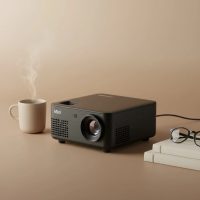
Living in a smaller space often feels like a compromise, especially when it comes to your entertainment setup. You dream of a massive, immersive screen for movie nights, but the reality of your apartment, dorm, or cozy living room makes a giant TV impractical. This is where the mini short throw projector transforms the game. It’s the ingenious solution that delivers a stunning, 100-inch-plus cinematic experience without demanding the space a traditional setup requires. As experts at Flasf, we’ve spent over a decade helping users maximize their viewing pleasure, and this technology is one of the most exciting developments for modern homes.
What Exactly is a Mini Short Throw Projector?
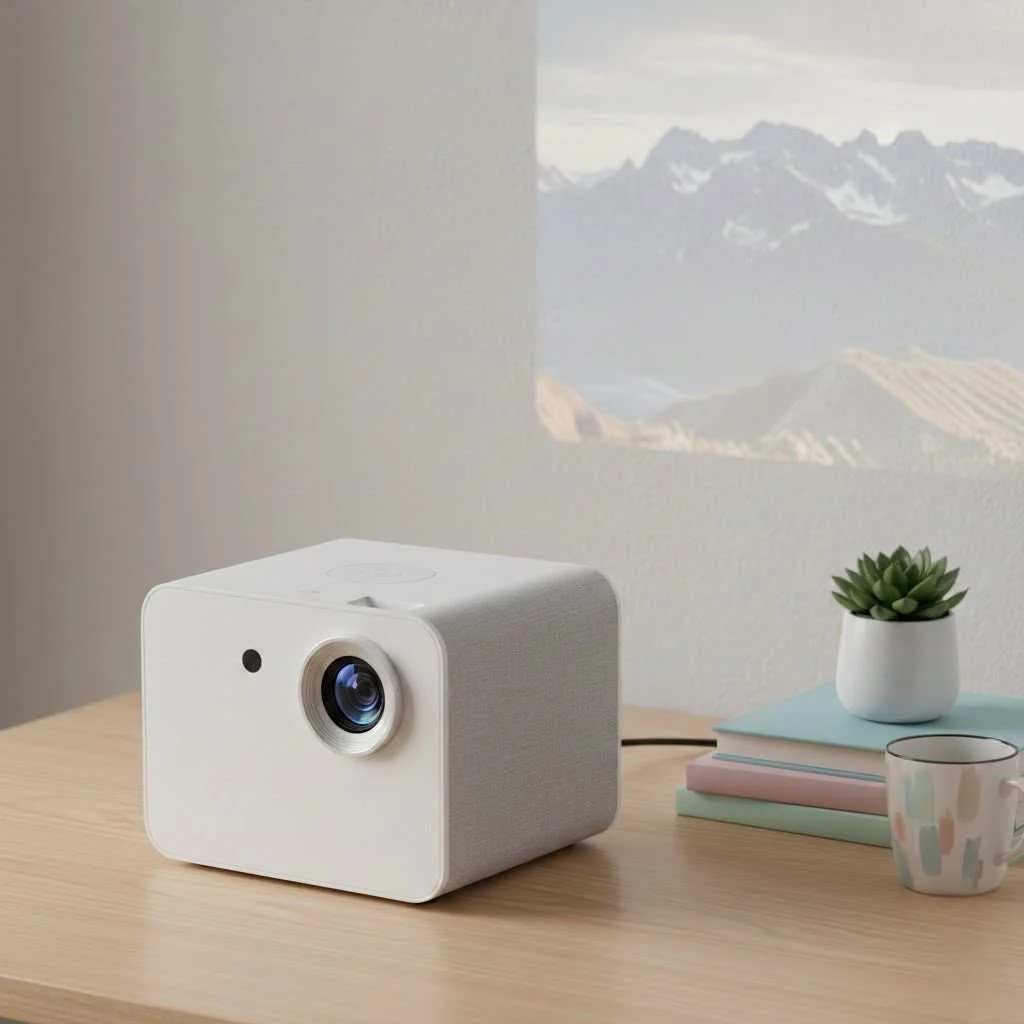
Let’s break down the terminology. At its core, a mini short throw projector is a compact, portable device engineered to project a very large image from a very short distance. Unlike standard projectors that need to be placed at the back of a room, this clever gadget can sit just a few feet—or even inches—away from the wall.
Think of it this way: a traditional projector is like a flashlight with a narrow beam; you need to stand far away to make the circle of light large. A short throw projector uses special lenses to act like a flashlight with an incredibly wide beam, creating a huge image even when it’s right next to the surface. This single feature is what makes it a perfect fit for environments where space is at a premium. The “mini” aspect simply means it’s designed for portability, with a lightweight build and often a built-in battery, allowing you to move your cinema from the living room to the bedroom, or even into the backyard.
The Key Advantages of a Mini Short Throw Projector
Choosing this technology isn’t just about saving space; it’s about upgrading your entire viewing experience with unparalleled flexibility. These projectors solve many of the common frustrations associated with traditional home theater systems.
Say Goodbye to Shadows
One of the most common annoyances with standard projectors is the shadow puppet show that happens whenever someone gets up for snacks. Because a mini short throw projector is positioned directly in front of the viewing area and close to the wall, the light path is short and low. This means you and your guests can move around freely without casting distracting shadows across the screen, keeping the immersion fully intact.
Big Screen Experience in the Smallest Spaces
|
Our Picks for the Best Mini Projector in 2026
As an Amazon Associate I earn from qualifying purchases.
|
||
| Num | Product | Action |
|---|---|---|
| 1 | SOOMFON Mini Projector 1080P Support - Portable Small Video Movie Projector Bluetooth 5.1 Auto Keystone Electric Focus for Bedroom/Wall/Home/Outdoor/iPhone/Android/TV Stick |

|
| 2 | Mini Portable Projector 4K WiFi 6 BT 5.2 Upgraded Portable Projector Full HD Supported for Phone /PC /TV /HDMI /PS5 /Laptop Auto Keystone Home Theater 180° Rotation [Built-in App] White |
|
| 3 | HAPPRUN Native 1080P Bluetooth Mini Projector, Full HD Portable Outdoor Movie Projector with Built-in Speaker, Compatible with Smartphone, HDMI, USB, AV, Fire Stick, PS5 for Home, Bedroom, Outdoor Use |
|
| 4 | Aurzen Roku TV Smart Projector with Wifi and Bluetooth, Roku Streaming Experience Built-in, 1080P FHD, Dolby Audio, Auto Focus & Keystone, Zoom, Movie Portable Outdoor Mini Projector, White |
|
| 5 | [Short Throw/1200ANSI/Built in Apps] 4K Outdoor Projector with WiFi and Bluetooth, Auto Focus Projector with Dual-Mode Stand, Smart Portable Proyector with Netflix/YouTube/PrimeVideo & Dolby |
|
| 6 | Magcubic Mini Projector with WiFi 6 and Bluetooth 5.4, Portable Projector 4K Support, 5W Soundbase Speaker, Auto Vertical Keystone 180°Rotatable Smart Proyector for Movie Home Outdoor |
|
| 7 | 【Officially-Licensed APP & Native 1080P】Thinnest 1.81\" Smart Mini Projector with WiFi and Bluetooth, Auto Focus & Keystone Portable Outdoor Projector, VOPLLS 4K Support Home Movie Projector |
|
| 8 | [Built-in Apps & 2025 Upgraded] Mini Projector Support 4K 1080P Auto Keystone 270° Rotatable with WiFi 6 and Bluetooth 5.4, Projector Portable Compatibile with HDMI/TV Stick/Memory Stick/Laptop-Black |
|
| 9 | [Compatible with Netflix & TOF Real-time Focus] Mini Projector with WiFi and Bluetooth, XuanPad Smart Projector 4K Support, Dolby Audio & Keystone, 210° Rotatable Stand for Home |
|
| 10 | Aurzen EAZZE D1 Smart Projector with WiFi and Bluetooth, Netflix-Officially-Licensed, Auto Focus & Keystone, DoIby Audio, Native 1080P Movie, Portable Outdoor Mini Projector, White |
|
This is the primary reason people fall in love with these devices. You can achieve a massive 100-inch or even 120-inch display from just a few feet away. In a room where a 65-inch TV would feel overwhelmingly large and dominate the decor, a mini short throw projector gives you a screen twice that size that simply disappears when you turn it off. It transforms any plain wall into a dynamic home cinema without the physical footprint.
Effortless Setup and Mobility
Forget about complex ceiling mounts and running long cables across the room. Setting up a mini short throw projector often takes less than five minutes. You simply place it on a console, coffee table, or even the floor, plug it in, and turn it on. Many models include smart features like auto-keystone correction and autofocus, which automatically square the image and dial in the sharpness for you. Their compact size and light weight also mean you can easily take movie night to another room or pack it for a trip.
How to Choose the Best Mini Short Throw Projector
Navigating the technical specifications can be daunting, but understanding a few key features will empower you to find the perfect model for your needs. As we always advise at Flasf, the “best” projector is the one that fits your specific room and viewing habits.
Throw Ratio: The Most Important Spec
The throw ratio tells you how large an image the projector can create from a certain distance. It’s written as a ratio, like 0.5:1. This means that for every 0.5 feet of distance from the wall, it creates 1 foot of image width. A projector with a 0.5:1 ratio could project a 100-inch (8.3-foot wide) image from just over 4 feet away.
- Short Throw: Typically have a throw ratio between 0.4:1 and 1:1.
- Ultra-Short Throw (UST): Have a ratio under 0.4:1 and can be placed directly against the wall. These are less “mini” and more of a premium, stationary option.
Brightness (Lumens)
Brightness determines how well the image stands up to ambient light. For projectors, this is measured in ANSI lumens. A higher number means a brighter picture. For a mini short throw projector, look for at least 500 ANSI lumens for comfortable viewing in a dimly lit room. If you plan to watch with some lights on, 800 ANSI lumens or more is ideal.
Resolution (Image Sharpness)
Resolution defines the clarity and detail of the picture. While 4K projectors are available, a Native 1080p (Full HD) resolution offers the best balance of performance and price for most users. It delivers a sharp, clear image for movies and gaming that is a significant step up from 720p models.
Connectivity Options
How will you get your content to the projector? Ensure the model you choose has the right inputs.
- HDMI: The most important port for connecting laptops, gaming consoles, and streaming sticks.
- USB: Useful for playing media directly from a thumb drive or powering a streaming device.
- Wi-Fi: Essential for smart projectors that have built-in apps like Netflix or YouTube.
- Bluetooth: A crucial feature for wirelessly connecting to a soundbar or headphones, as built-in projector speakers are often quite basic.
“We’re seeing a huge shift in home entertainment,” notes Alex Thompson, Senior Product Analyst at Flasf. “People no longer want a permanent, bulky screen dictating their living space. A high-quality mini short throw projector offers the best of both worlds: a massive, beautiful picture when you want it, and your clean, uncluttered wall back when you don’t.”
Potential Downsides to Consider
While these projectors are fantastic, a balanced view is important. First, they often come at a higher price point than standard mini projectors due to the complex lens technology. Second, for the absolute best image quality, they require a very smooth, flat, and uniformly colored wall. Any imperfections or textures on your wall will be noticeable. For optimal results, investing in a proper ambient light rejecting (ALR) screen is recommended, especially for ultra-short throw models. Finally, their zoom capabilities are typically limited, so image size is almost entirely controlled by placement.
Frequently Asked Questions (FAQ)
What is the ideal distance for a mini short throw projector?
This depends entirely on its throw ratio and the screen size you want. Generally, it will be placed between 1 to 8 feet from the projection surface. Always check the manufacturer’s specifications to be sure.
Can I use a mini short throw projector in a bright room?
You can, but the image quality will be compromised. For the best experience with rich colors and deep contrast, a dark or dimly lit room is recommended. If you must watch in a brighter space, choose a model with high ANSI lumens (1000+) and consider an ALR screen.
Do I really need a special screen?
While you can project directly onto a white or light-gray wall, a dedicated projector screen will always provide a better viewing experience. Screens are designed to reflect light uniformly, which enhances brightness, color accuracy, and contrast.
What is the difference between short throw and ultra-short throw?
The key difference is distance. A short throw projector sits a few feet from the wall. An ultra-short throw (UST) projector sits just inches away, often on a media console directly below the screen. UST projectors are typically larger, brighter, and more expensive.
Are these projectors good for gaming?
Absolutely! Many models are excellent for gaming, offering a large, immersive display that can make gameplay more exciting. Look for a model that specifies a low input lag (under 40ms is good, under 20ms is great) to ensure a responsive experience.
The Future of Home Entertainment is Here
The mini short throw projector is more than just a gadget; it’s a fundamental shift in how we approach home entertainment. It frees you from the constraints of physical screen sizes and room layouts, offering a flexible, powerful, and high-quality solution for modern living. By understanding the key factors—throw ratio, brightness, resolution, and connectivity—you can confidently select a device that will turn any room into an epic cinema. It’s time to think beyond the television and embrace the big-screen freedom you’ve always wanted.
Get our weekly buyer guide
Practical specs, not advice. Unsubscribe anytime.